


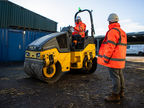


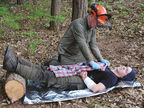




When you pass an NPORS test, there are two types of card you can apply for: the NPORS CSCS card and the NPORS Traditional card. The training and the test are exactly the same for both. What changes is the card you're issued and who asks for it.
The short answer
You can work on any site with an NPORS card. The NPORS CSCS card is the one Tier 1 construction companies require, and some Tier 2 contractors ask for it too. If you work, or want to work, for the big main contractors, get the CSCS card. For everything else, the Traditional card does the job.
- Working for Tier 1 contractors, or Tier 2 contractors that ask for it? You need the NPORS CSCS card.
- Working for smaller builders and groundworkers, or outside construction on farms, estates, in forestry, warehousing or industrial yards? The NPORS Traditional card is usually all you need.
If you're not sure who you'll be working for, check with the main contractor before you book, or go for the CSCS card to keep every door open.
The NPORS CSCS card
NPORS is a partner card scheme of CSCS, so this card carries the CSCS logo and meets the requirements set by the Construction Leadership Council. It's the card Tier 1 construction companies require before they'll let you operate on their sites, and some Tier 2 contractors ask for it too.
It comes in two stages:
- Red Trained Operator card. For operators who don't yet hold the NVQ for their category. It lasts two years and can't be renewed. During those two years you need to register for and achieve the Level 2 NVQ.
- Blue Competent Operator card. For operators who hold the NVQ. It lasts five years and comes with a CPD record and operator logbook.
To apply for either, you need to have passed the NPORS or CITB Health, Safety & Environment touch screen test within the two years before you apply.
The NPORS Traditional card
The Traditional card is a recognised NPORS qualification you can work with on any site where a CSCS-logo card isn't specifically required. That covers plenty of construction work with smaller contractors, as well as farms, estates and industry. NPORS is clear that the standards and the way you achieve it are exactly the same as the CSCS route. The only difference on the card itself is that it doesn't carry the CSCS logo.
It's issued as a 3 or 5 year registration. The length is agreed between the operator or employer and the training provider, depending on what your sector or company needs. If you've passed the HS&E touch screen test within the last two years, the card can also show that you're HS&E tested.
Side by side
| NPORS CSCS card | NPORS Traditional card | |
|---|---|---|
| Best for | Tier 1 sites, and Tier 2 contractors that require it | Smaller contractors, farms, estates, forestry and industry |
| CSCS logo | Yes | No |
| Training and test | Same NPORS training and test | Same NPORS training and test |
| How long it lasts | Red: 2 years (not renewable) Blue: 5 years | 3 or 5 years |
| HS&E test | Needed, passed within the last 2 years | Optional, adds an HS&E tested endorsement |
| NVQ | Needed for the Blue card | Not needed |
Which should you choose?
Think about who you'll be working for, not just where you work today. If you're aiming for jobs with Tier 1 main contractors, or Tier 2 contractors that ask for it, the CSCS card is the one to get. An operator working for smaller builders, or a farm operator who never sets foot on a major site, is well served by the Traditional card.
Contractors set their own rules, so it's worth checking what the main contractor asks for before you book.
We'll help you get it right
We train and test on both routes, at our Meopham training centre or on your site. Tell us where you or your team will be working and we'll make sure you apply for the right card. If you need the HS&E test first, we can point you in the right direction, and our Level 2 NVQs take you from the Red card to the Blue card.